
'The new generation voter is hyper-nationalistic, but it isn't essentially illiberal.' 'They will find the rants of Adityanath as laughable as Irfan Habib's. They will also find the BJP's polarising approach to vote-gathering unacceptable if it fails to deliver jobs and growth,' says Shekhar Gupta.

Hemal Trivedi, a Hindu filmmaker originally from India, and Mohammed Ali Naqvi, a Muslim from Pakistan have made one of this year's most talked about films.

'The Pakistan government, we were told, has a plan to renovate several Hindu temples and Buddhist sites, which over the years have fallen into disrepair. The aim is to create a pilgrimage circuit to attract visitors from all over the subcontinent.'

'The idea behind the new rules is that slaughter markets must buy directly from the farms as is the case in the bloody world.' 'The cattle markets have become centres for the organised beef mafia.'

The strong Modi wave, disillusionment with the Akhilesh Yadav-led government in the state and the division of the anti-Modi vote will help the BJP leader edge closer to the PM's chair, observes Sharat Pradhan.

Aziz Haniffa, who has covered every Indian Prime Minister's visit to the US since Rajiv Gandhi in 1985, gives us a peek into what's happening in Washington, DC on the eve of the Modi-Trump summit.
.jpg)
The Indian Army must be given a free hand to retaliate punitively at one or more places of its choosing on the LoC. The aim should be to cause maximum damage to the forward posts of the Pakistan army, particularly those through which recent attacks have been launched, thereby raising the cost for the army, says Gurmeet Kanwal.

Terrorism and Afghanistan were the focus points of Prime Minister Narendra Modi's talks with Uzbek President Islam Karimov on his first visit to Central Asia.

20 years ago this day, May 11, 1998, India conducted its second nuclear test at Pokharan in Rajasthan. In a fascinating interview on Rediff.com, K Subrahmanyam revealed how Indian PMs reacted to nuclear ambitions.

Anupam Kher on why he thinks the prime minister is a genuine person.

A definitive guide to the movers and shakers who sit at the helm of the Asian sports boom.
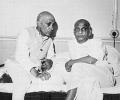
The debate on Sardar Patel's legacy is less about the Sardar and more about the acute sense of threat felt by the Delhi establishment at the rise of Narendra Modi and questions he has raised about the disproportionate share of credit given to a single family, says Colonel (retd) Anil Athale.

'Whether it's investments in Kashmir, building naval facilities, or selling top-of-the-range military equipment, Pakistan could well benefit more under Xi's watch.' 'Do Chinese concerns about the 'Islamisation' of Pakistan give it pause about how quickly to move forward with security and economic projects? At the moment the indication is quite the opposite: China is doubling down on its support to Pakistan, partly because of its fears about where the country is headed.'

'Mufti is much more mellowed, much more accommodating. He knows he is stuck and he knows that he cannot retreat now.'

'J&K continues to have the highest concentration of military personnel anywhere in the world and the alienation of the Kashmiri has increased in the last ten years than ever before.'

'If there's one administration that would be likely to put the squeeze on Pakistan, it's the Trump administration.' 'This is an administration that views terrorists as a black and white issue (kill them all, no questions asked), and will have little patience for Pakistan's selective policy toward terrorism.'
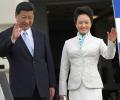
'India and China have to make concrete progress with regard to the border issue, addressing the trade deficit, and facilitating people-to-people interactions. This has to happen in the next two, three years.' China expert Tansen Sen tells Sheela Bhatt/Rediff.com how India and China can take their relations to the next level.

With Beijing having had a profound rethink on India's admission as a full member of the Shanghai Cooperation Organisation, the tectonic plates of the geopolitics of a massive swathe of the planet stretching from the Asia-Pacific to West Asia are dramatically shifting. That grating noise in the Central Asian steppes will be heard far and wide -- as far as North America, says Ambassador M K Bhadrakumar.

The India-Afghanistan relationship does not have to be a template of each country's relations with Pakistan, and Delhi will do well to leave it to Ghani to redefine the parameters of Afghanistan's security cooperation with India. A zero-sum mindset can only exacerbate regional tensions, says Ambassador M K Bhadrakumar.

'Nehru had multiple chances to make compromises, that would have preserved a united India, and he chose not to,' Nisid Hajari tells Vaihayasi Pande Daniel/Rediff.com

'It was a mission undertaken in darkness in every sense -- literally, because Afghanistan had no electricity at that time; and, metaphorically because Delhi historically dealt only with the Pashtuns of Afghanistan and the foreign ministry's vast archives had nothing to offer on the culture and politics of the northern tribes in the Hindu Kush.'

'I believe in India people should have, up to a certain age, compulsory military training. I also believe that voting should be made compulsory. I have some violent idea, that all candidates should sign an affidavit that whatever they have promised to the people, if they are unable to fulfill they won't stand in elections again.' 'I addressed a meeting near the Kalandari mosque where more than 8,000 Muslims had come to listen to me. I said Muslims have nothing to fear, you fear only Allah. You should be afraid of no one... Some people are creating a fear about Modi in your community. I only want you to understand that.' Paresh Rawal, the BJP candidate from Ahmedabad East, speaks to Sheela Bhatt/Rediff.com

'I can tell you the case that hurts me the most is the one in which the little boy is forced to sign the Kohinoor over.' 'You take a mother away from a child, you surround him with grown ups speaking a different language, you tell him he must sign this over or else...'
